Why AI Models Predict Words Instead of Understanding Meaning

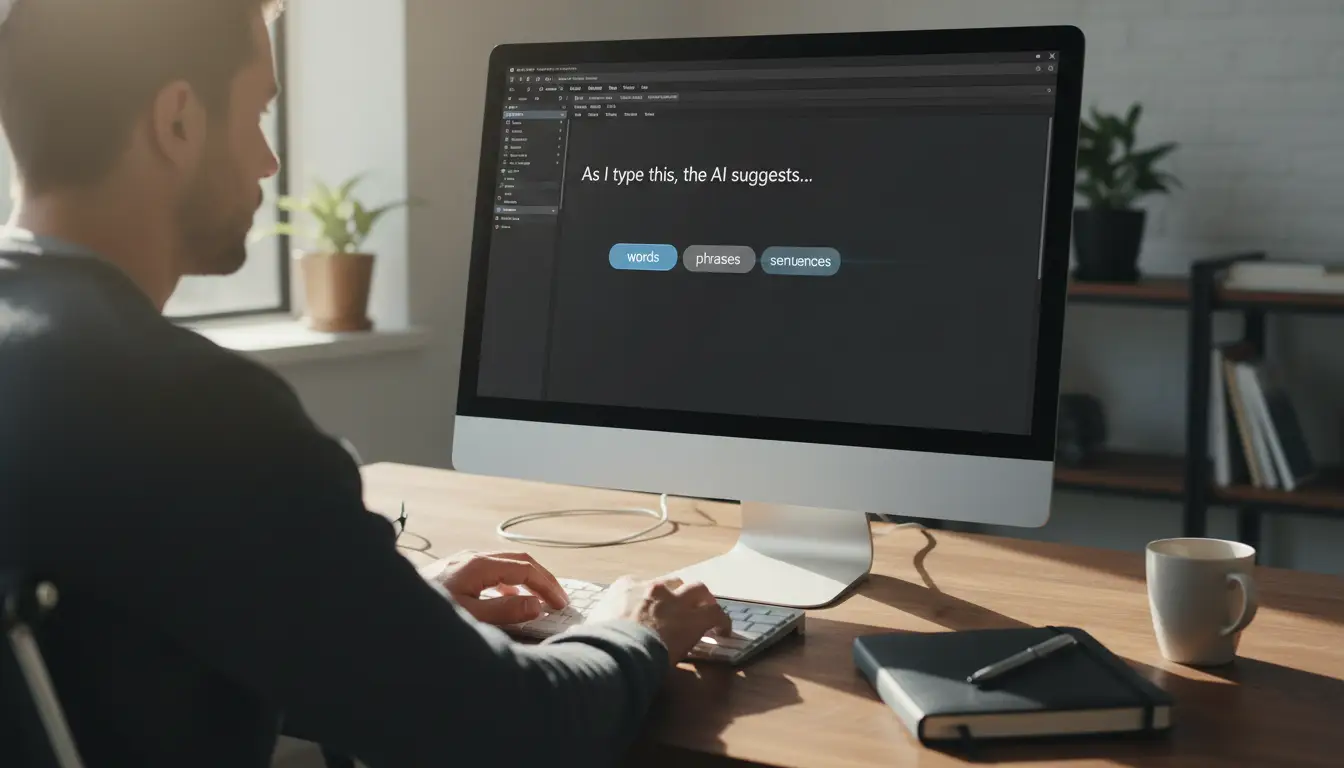
Artificial intelligence tools that generate text have become part of everyday life. From answering questions to drafting emails and writing articles, modern AI systems can produce surprisingly fluent language. Because of this fluency, many people naturally assume that AI understands language in the same way humans do.
However, this assumption can be misleading.
While AI models appear intelligent and conversational, they do not actually understand meaning the way people do. Instead, they rely on advanced statistical techniques that allow them to predict the most likely sequence of words based on patterns learned from massive amounts of text data.
Understanding this distinction is important for anyone who uses AI tools today.
How AI Generates Text
At the core of most modern AI writing systems is a process called language prediction. These systems are often known as large language models, and their primary task is surprisingly simple: predict the next word in a sequence.
During training, the model analyzes enormous collections of written material—books, articles, websites, and other publicly available text. Instead of memorizing sentences, the model learns statistical patterns about how words commonly appear together.
For example, consider the sentence:
“The sun rises in the ___.”
A human instantly knows the answer is east because they understand geography and the meaning of the sentence. An AI model reaches the same answer differently. It calculates probabilities based on patterns seen in training data. Because the phrase “rises in the east” appears frequently in text, the model predicts that east is the most likely next word.
Another simple example:
“I drink coffee every ___.”
Possible predictions might include:
- morning
- day
- evening
The AI selects the word with the highest probability given the context. It does not “know” what coffee is or what a morning feels like—it simply predicts the most statistically likely continuation.
This process happens repeatedly, word by word, allowing AI systems to generate entire paragraphs.
Prediction vs Meaning
The difference between prediction and understanding is subtle but important.
Human understanding involves concepts, experiences, and mental models of the world. When people read a sentence, they connect words to real-world knowledge, memories, and reasoning.
AI models operate differently.
They do not possess beliefs, experiences, or awareness. Instead, they rely entirely on statistical relationships between words.
For instance, if a model frequently encounters phrases like:
- “doctors treat patients”
- “teachers teach students”
- “drivers operate vehicles”
it learns patterns about how these words tend to appear together. When asked to generate text, it uses these patterns to produce sentences that sound logical.
This pattern-based approach is known as AI pattern recognition.
Because these patterns capture many real-world relationships embedded in language, the resulting text can appear remarkably intelligent. Sentences flow naturally, explanations seem coherent, and conversations feel realistic.
But the key point is this: the AI is not reasoning about meaning. It is predicting which words are most likely to come next based on patterns.
This is why AI can sometimes produce confident answers that are incorrect. When patterns are incomplete or ambiguous, the model may generate a response that sounds plausible but does not accurately reflect reality.
In other words, fluency can create the illusion of understanding.
Why This Distinction Matters
Understanding the difference between prediction and meaning has important implications for how AI tools should be used.
1. Education
Students increasingly use AI systems to help with writing, research, and studying. These tools can be helpful for explaining concepts, summarizing information, or generating practice questions.
However, learners should remember that AI responses are generated through pattern prediction, not verified reasoning. This means answers should be checked against reliable sources, especially for academic work.
Using AI as a learning assistant can be valuable—but it should not replace critical thinking.
2. Business Use
Many organizations are integrating AI into customer service, marketing, and internal workflows. AI-generated text can save time and improve productivity.
Yet businesses must recognize the limits of language models. Because AI does not truly understand context, it may occasionally generate inaccurate or misleading information.
For tasks that require precision—such as legal advice, financial guidance, or medical communication—human oversight remains essential.
3. Research and Knowledge Work
Researchers and professionals often rely on accurate information. While AI tools can assist with brainstorming or summarizing large amounts of text, they should not be treated as authoritative sources.
AI outputs should be considered draft material rather than final knowledge.
Recognizing the predictive nature of AI helps users approach these tools more responsibly.
4. Decision-Making
When organizations or individuals use AI-generated information for decisions, it is important to understand the system’s limitations.
AI models do not evaluate truth, ethics, or real-world consequences. They simply generate language based on probability.
Human judgment is still required to interpret results and make informed choices.
Conclusion
Modern AI language systems are powerful tools capable of producing fluent and convincing text. Their ability to generate human-like responses can make it seem as though they truly understand language and meaning.
In reality, these systems work through probability and pattern recognition. They predict words based on statistical relationships learned from massive datasets, rather than understanding concepts the way humans do.
Recognizing this difference helps users approach AI more thoughtfully.
AI models simulate language remarkably well—but they do not truly comprehend it. By keeping this in mind, individuals, educators, and organizations can use AI tools responsibly while continuing to rely on human understanding, judgment, and expertise.