

Early AI Dreams: What Researchers First Got Wrong About Artificial Intelligence

Introduction
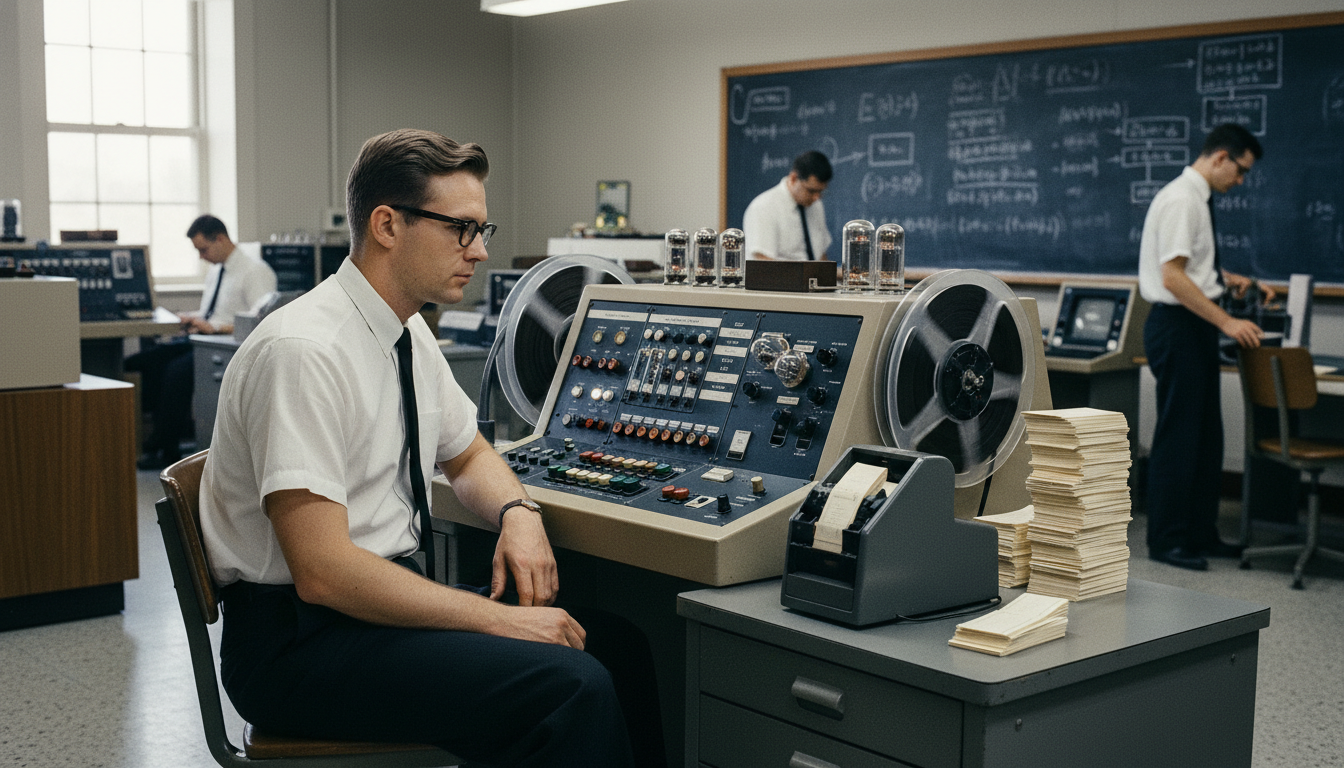
In the early decades of artificial intelligence research, optimism ran high. Many of the first AI researchers believed they were only a few breakthroughs away from creating machines that could think, reason, and learn much like humans. Early demonstrations—programs that solved logic puzzles or played simple games—seemed to confirm that belief. This period in early AI history was defined by confidence, ambition, and a strong faith in human reasoning as something that could be neatly translated into code.
Yet, with hindsight, it is clear that many early expectations were unrealistic. The gap between narrow technical success and general human intelligence was far wider than researchers anticipated. Understanding these early artificial intelligence mistakes is not about criticizing past scientists. Instead, it helps explain why AI developed unevenly, why progress stalled at times, and why modern discussions about AI still benefit from humility and human judgment.
The Optimism of Early AI Research
The optimism surrounding artificial intelligence reached its peak between the 1950s and 1970s. During this period, computers were new, powerful, and mysterious. To many researchers, they appeared capable of handling any task that could be described logically. If human reasoning followed rules, then machines, it was assumed, could follow those rules too.
Early AI research focused heavily on symbolic AI—systems that manipulated symbols and rules to represent knowledge. Researchers believed that intelligence could be broken down into logical steps and encoded directly into software. Programs were built to solve mathematical proofs, play board games, and process simplified forms of language. These early successes reinforced the belief that general intelligence was within reach.
The first AI researchers were not careless or naïve. They were working with limited tools and unprecedented possibilities. However, they underestimated how much human intelligence depends on context, experience, and tacit knowledge—elements that are difficult to formalize. As a result, early AI ambitions far outpaced what technology and theory could realistically support.
What Early AI Researchers Got Wrong
Overestimating Computational Power
One of the most significant early artificial intelligence mistakes was overestimating how much computational power was available—and how much would be needed. Early AI programs worked well in controlled environments with limited variables. Researchers assumed that scaling these systems up would be straightforward.
In reality, many AI problems grow exponentially more complex as variables increase. Tasks that seemed simple in theory required enormous amounts of memory and processing power when applied to real-world situations. Computers of the time were simply not capable of handling this complexity, and even modern systems still face limits.
Underestimating the Complexity of Human Intelligence
Early AI research treated intelligence as a problem-solving activity that could be isolated from the body, emotions, and social context. Human intelligence, however, is not just logical reasoning. It involves perception, intuition, common sense, and the ability to adapt to unfamiliar situations.
Researchers underestimated how much of human intelligence is implicit rather than explicit. People make decisions based on experience and context without being able to articulate every step. This kind of understanding proved extremely difficult to capture in rules and symbols.
Assuming Intelligence Could Be Fully Formalized
Perhaps the most foundational mistake in early AI history was the assumption that intelligence could be fully described using formal logic. If every aspect of thinking could be expressed as rules, then machines could replicate it.
Over time, this assumption proved too simplistic. Many aspects of intelligence—such as understanding language nuances or interpreting social cues—do not follow strict rules. They rely on probability, ambiguity, and lived experience. This realization eventually led researchers to explore data-driven approaches, but not before early symbolic systems reached their limits.
Why These Early Mistakes Still Matter Today
Although artificial intelligence has advanced significantly, the lessons from early AI history remain relevant. Modern AI systems are far more capable, but they still operate within constraints shaped by data, design choices, and human objectives. Understanding early misunderstandings helps prevent repeating them in new forms.
For example, today’s AI systems can process vast amounts of data, but they still lack true understanding. They recognize patterns rather than meaning. This limitation echoes earlier failures, where systems performed well in narrow tasks but failed in broader contexts. Modern discussions about AI benefit from remembering that intelligence is not just computation.
These lessons are explored in greater depth in the broader historical context provided in History and Evolution of Artificial Intelligence, which traces how early setbacks ultimately shaped more realistic and responsible approaches to AI development.
Early AI mistakes also remind us why human judgment remains essential. Technology improves, but assumptions about replacing human intelligence entirely continue to resurface. History shows that progress happens fastest when AI is treated as a tool that supports people rather than attempts to replicate them.
Conclusion
The early dreams of artificial intelligence were ambitious, imaginative, and ultimately incomplete. Researchers believed intelligence could be fully captured through logic and computation, underestimating both the limits of machines and the depth of human cognition. These early artificial intelligence mistakes slowed progress but also provided valuable lessons.
Modern AI exists because of these early efforts, not despite them. By understanding what the first AI researchers got wrong, we gain a clearer perspective on what AI can realistically achieve today—and why human insight, responsibility, and judgment remain central to its future development.